
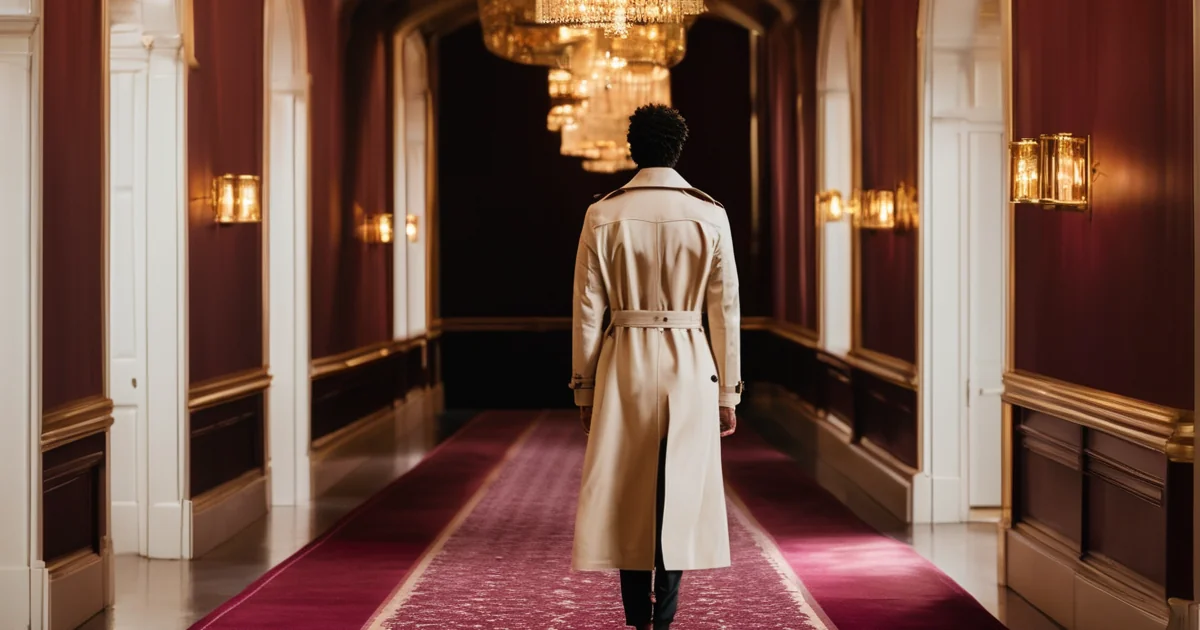
You can tell almost everything about someone's state of mind from the moment they walk in the door.
The speed, the rhythm, the posture, the direction of gaze, the quality of their movement — before a word is spoken, a complete story has been told. Psychologists call these "thin slices" of behavior, and they're read in milliseconds by everyone you pass.
The person who walks with genuine confidence doesn't just look different. They move differently — and that difference is legible to everyone, at every distance.
This guide breaks down exactly what a confident walk looks like, the science behind it, and how to develop it systematically.
Why How You Walk Matters More Than You Think
Evolutionary psychologists and body language researchers have documented that humans assess social status, health, and threat level from gait — movement patterns — with remarkable speed and accuracy.
A 2013 study published in PLos ONE found that observers watching brief video clips of people walking could accurately assess personality traits (extraversion, neuroticism, conscientiousness) from gait alone — with above-chance accuracy achieved within the first second of observation.
More relevantly for attraction: research by Kerri Johnson (UCLA) found that how attractively people move — the rhythm, smoothness, and expansiveness of their gait — is a significant predictor of how attractive they're rated, independent of physical appearance.
The confidence your walk communicates is not a trivial social signal. It affects first impressions, hiring decisions, romantic attraction, and how strangers treat you in everyday life.
The Anatomy of a Confident Walk
1. Spine and Posture (The Foundation)
What it looks like:
- Spine elongated — imagine a gentle upward pull from the crown of your head
- Shoulders rolled back and down (not raised or hunched forward)
- Chest open — not artificially puffed, but not caved in
- Natural slight inward curve of the lower back (lordosis) — not exaggerated, not flattened
- Chin parallel to the floor — neither tilted down (submissive) nor tilted back (arrogant)
What it doesn't look like:
- Shoulders hunched or rolled forward
- Head thrust forward (forward head posture — extremely common from phone use)
- Chest collapsed inward
- Exaggerated military stiffness (rigid is not the same as confident)
The single most common postural error is forward head posture — the head positioned inches in front of the body's center of gravity due to habitual phone and computer use. Each inch the head moves forward adds approximately 10 pounds of effective load on the cervical spine, producing chronic tension and a silhouette that reads as physically stressed and submissive.
Correcting forward head posture:
1. Chin tuck: Gently tuck chin slightly (without looking down) to lengthen the back of the neck. Do 10 reps, hold 5 seconds.
2. Chest openers: Clasp hands behind back, gently squeeze shoulder blades together and lift slightly. Hold 10–15 seconds, repeat 3x.
3. Strengthen the deep neck flexors and upper back through targeted exercise.
2. Pace and Rhythm
The pace of confidence:
Confident people walk at a measured, unhurried pace — not rushing, not shuffling. They move as though they have somewhere to be and enough time to get there.
Research on social dominance and movement consistently finds that slower, more deliberate movement is associated with higher status and confidence ratings. Rapid, darting, or erratic movement reads as anxious, low-status, or threat-reactive.
The specific numbers:
A typically anxious gait often runs 10–20% faster than situationally appropriate. Slowing down deliberately — by about 10% from your natural rushed pace — produces a measurable difference in perceived confidence without slowing you to the point of absurdity.
Even rhythm:
Confident gait has an even, consistent rhythm. Highly anxious gait often has uneven rhythm — alternately too fast and stuttering. Developing rhythm awareness through deliberate practice (even practicing to music) can dramatically improve gait confidence.
3. The Direction of Gaze
Where confident people look:
Slightly ahead and at horizon level. Not down at the ground. Not anxiously scanning. Not into their phone.
Looking down while walking communicates the desire to be invisible — to not be seen or to avoid potential social contact. It is the physical posture of someone actively minimizing their presence in the world.
Looking slightly ahead, at a horizon-parallel angle, communicates engagement with the environment and comfort being seen in it.
Incidental eye contact:
Confident people make brief, natural eye contact with others they pass — not seeking it, not avoiding it. A 1–2 second natural hold with a slight acknowledgment (a nod, or a subtle upward lip expression) is the mark of someone comfortable in their social environment.
Avoiding all eye contact while walking reads as anxiety. Seeking eye contact from everyone reads as something else. Brief, natural, unhurried — that's the target.
4. Arm Swing
Natural, free arm swing — roughly synchronized with opposite foot strike — communicates ease and physical confidence. Suppressed arm swing (arms held tight to the body, minimal movement) is associated with stress, anxiety, and physical defensiveness.
What to watch for:
- Arms crossing the body's midline excessively (a common anxiety pattern)
- Arms held too rigidly at the sides
- Asymmetric arm swing (often indicates an unconscious protective posture)
The adjustment:
Allow your arms to swing naturally. Don't artificially exaggerate — that reads as performance. Simply stop suppressing the natural movement by relaxing your shoulders and upper arms.
5. Step Width and Foot Strike
Stance width:
A confident walk has feet striking roughly hip-width apart. Very narrow steps (one foot nearly in front of the other) read as contracted and uncertain. Very wide steps read as effortful swagger — which is its own kind of insecurity.
Foot strike quality:
Confident walkers tend toward heel-to-toe rolling motion — controlled, with appropriate use of the whole foot. Shuffling (dragging feet) communicates lethargy and disengagement. Mincing (tiny, rapid steps) communicates physical uncertainty.
Ground contact:
The confident walker's feet meet the ground with authority — planted, not tentative. There's a quality of ownership in each step.
Entering a Room: The Moment That Matters Most
How you enter a space sets the tone for every interaction within it. Most people enter rooms with one of two anxiety-driven patterns:
The rush: Head down, moving quickly to a destination, minimizing exposure in the transitional moment.
The scan: Eyes moving rapidly around the room, posture slightly contracted, the body language of someone seeking an exit strategy.
The confident entry:
-
Pause at the threshold. One to two seconds. Not dramatically — just briefly. Allow yourself to occupy the doorway for a moment before moving.
-
Survey the room from your paused position. Let your eyes move calmly across the space from your grounded position rather than while moving.
-
Choose a direction and move toward it. Not hurriedly, not hesitantly.
This three-part sequence communicates, non-verbally: "I have arrived. I am comfortable here. I am choosing where I go."
The difference between this and either rushing or scanning is immediately perceptible to everyone in the room.
Building the Habit: 30-Day Walk Practice
| Week | Focus | Daily Practice |
|---|---|---|
| 1 | Posture awareness | 3 phone alarm reminders to check posture; full-length mirror check morning and evening |
| 2 | Pace | Choose one daily walk where you deliberately slow pace by 10%; focus on even rhythm |
| 3 | Gaze and room entry | Practice horizon-level gaze during all walks; practice threshold pause at 5 doors daily |
| 4 | Integration | One "performance walk" daily — combine all elements consciously; video record to review |
The video review:
Record yourself walking on a flat surface for 30 seconds. Watch it back. Most people are genuinely surprised — often dismayed — by the gap between how they think they walk and how they actually walk. This awareness is the fastest catalyst for change.
The Physical Foundation: Exercises That Change Your Walk
Confident posture isn't just habit — it's partially structural. Weak or tight muscles create postural patterns that are difficult to override through intention alone.
For upright spine and open chest:
- Thoracic spine extension over a foam roller (2 min daily)
- Seated or standing cable rows / band pull-aparts (rear deltoids and rhomboids)
- Face pulls (rear deltoids, external rotators)
For forward head correction:
- Chin tucks (daily)
- Dead hangs from a bar (if accessible)
- Neck strengthening exercises
For hip extension and natural gait:
- Hip flexor stretching (kneeling lunge position, 60 seconds per side)
- Glute bridges and hip thrusts (builds the posterior chain that enables upright walking)
- Walking with deliberate glute activation (squeeze slightly at the end of each step)
These exercises, practiced 3x per week, produce measurable postural changes within 6–8 weeks. For the complete physical transformation framework, see our glow up guide.
Frequently Asked Questions
Q: Can you change how you walk as an adult?
Yes. Gait patterns are largely habitual — patterns reinforced through repetition over years. They can be re-patterned through deliberate practice, body awareness, and in some cases physical training that addresses the muscular imbalances underlying poor posture. The adult brain retains the neuroplasticity to form new motor habits.
Q: How long does it take to walk more confidently?
Conscious changes can be applied immediately, but feel effortful at first. With consistent daily practice, most people report that the new patterns begin to feel natural within 4–6 weeks. Full automatization — where you no longer have to consciously direct it — typically takes 3–6 months.
Q: What's the most common mistake people make when trying to walk more confidently?
Exaggerating. Artificially puffed chest, exaggerated swagger, or deliberately slow-motion walking all read as performance rather than genuine confidence — which is actually less attractive than an unselfconscious natural walk. The target is relaxed confidence, not a display.
Q: Does how I walk affect how I feel about myself (or just how others see me)?
Both. The bidirectional relationship between posture and internal state is well-supported in embodied cognition research. Consistently walking with an upright, open, unhurried posture produces corresponding internal signals that affect mood, confidence, and physiological arousal. This is not the same as the hormonal transformation claims in the power poses debate — it's a more modest, better-supported phenomenon.
Q: Can physical injury affect confident walking?
Yes — if chronic pain, injury, or physical limitations are affecting your gait, addressing those with appropriate physical therapy is the foundation rather than a movement technique overlay.
Conclusion
Every step you take is a statement. The sum of those statements, across every environment you move through, is your physical brand — the message your body sends before you speak.
Developing a confident walk is not vanity. It's communication. And like all communication, it can be practiced, refined, and improved until it becomes second nature.
Start today. One walk, deliberately.
→ Download Free: Body Language Cheat Sheet — 21 Attraction Signals Decoded
References: Johnson KL, et al. (2007). Walk on the wild side: Attractiveness of movement in humans and non-human animals. Proceedings of the Royal Society B. | Carney DR, et al. (2010). Power posing. Psychological Science. | Koppensteiner M. (2013). Shaping social perception by kinematics. PLos ONE.



0 Comments
Leave a Comment
Your email won't be published. Comments are moderated.
No comments yet. Be the first to share your thoughts!